



ABOUT FRE



Why Your Vitamin C Serum Isn’t Working (A Chemist Explains VC-IP)
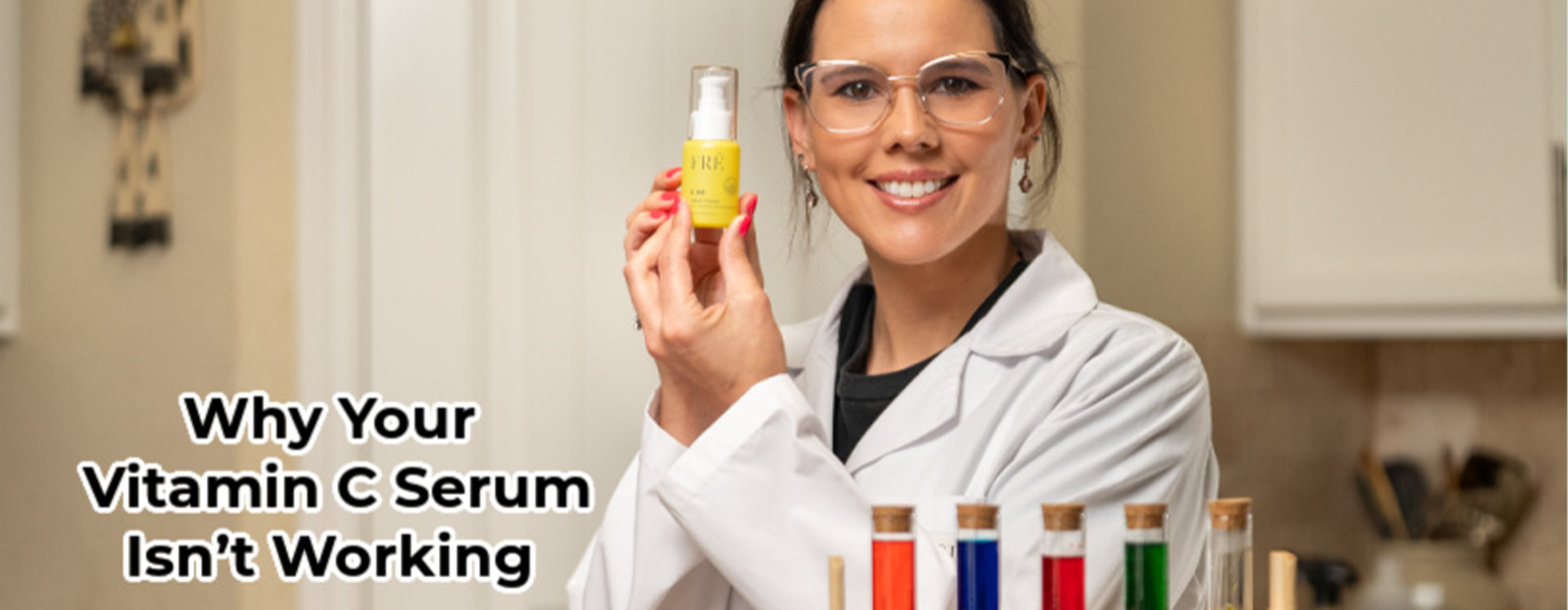

If you’ve tried a vitamin C serum and thought things like it stings, it turns brown after a month, it breaks you out, or it just… doesn’t do anything. You aren’t alone!
As a chemist, I can tell you this: most frustration with vitamin C isn’t about the ingredient itself, but it’s about the type of vitamin C used in the formula.
And one form most people overlook is VC-IP vitamin C serum. Here’s a deeper breakdown of VC-IP vitamin C and how it converts in skin. I personally use this VC-IP serum (use discount code alexisroch for 50% off now) which is effective and has 100% clean ingredients that deliver results. Not all VC-IP serums are the same, so make sure you are using this one that is chemist approved.
Let’s bust a few myths.

👩🏻🔬Chemist Tip: Increase effectiveness of any product you use by trying out the firming serum with HA and niacinamide. Also 50% off today only.
SHOP WITH ALEXIS
Myth #1: All Vitamin C Serums Work the Same
In short, they don’t. Most traditional vitamin C serums use L-ascorbic acid. It’s powerful, but it’s also unstable and requires a very low pH to penetrate skin.
VC-IP (tetrahexyldecyl ascorbate) is different.
It’s an oil-soluble vitamin C derivative. That changes how it interacts with your skin barrier, maintains stability, how it feels on the skin, and also how it might irritate or not.
From a chemistry standpoint, these differences matter.
Myth #2: If It Burns, It’s Working
Burning equals irritation, not effectiveness! Low-pH L-ascorbic acid formulas often cause tingling because they are acidic enough to disrupt the outer skin layer temporarily.
VC-IP vitamin C serum (discount code alexisroch) doesn’t rely on an ultra-acidic environment to function. It converts within the skin more gradually, which often makes it a better option for sensitive or barrier-compromised skin.
Brightening should not require discomfort.
Myth #3: If It Turns Brown, It’s Still Fine
When L-ascorbic acid turns brown, it’s oxidizing.
Oxidation means reduced potency. This means you are getting less antioxidant benefit and possible increase in skin stress.
One reason science based skincare brands like tetrahexyldecyl ascorbate is its increased stability. Because it is oil-soluble and structurally modified, it resists oxidation far better in normal packaging conditions.
Who Should Consider VC-IP Vitamin C Serum?
Anyone may benefit from oil-soluble vitamin C.
Especially if you:
-
Have sensitive skin
-
Experience redness from traditional vitamin C
-
Have dry skin or barrier damage

Vitamin C Isn’t the Problem
Vitamin C is one of the most researched skincare ingredients available.
But saying “vitamin C doesn’t work” is not true. The formula matters. The type matters. And the stability matters the most. If something isn't stable, you won't get the full benefits.
And the smarter choice is using the correct form of vitamin C, VC-IP (you can use discount code alexisroch at checkout for this)
SHOP WITH ALEXIS
To conclude, here are some common FAQs we get about Vitamin C skincare:
Is VC-IP better than L-ascorbic acid?
While it depends on skin type, VC-IP is more stable and less irritating, so it is usually a better choice overall.
Does VC-IP penetrate skin?
Yes. Because it is oil-soluble, it integrates into the skin’s lipid barrier and converts within the skin. In fact, with this advanced form of Vitamin C, it remains in skin cells up to 80 times longer than L-ascorbic acid and has 4 times the effect on skin.
Why does vitamin C turn brown?
Oxidation from exposure to air and light degrades L-ascorbic acid formulas.
More Skincare Articles From Chemistry Cachet:
SHOP WITH ALEXIS
About the Author
Hi, I'm Alexis! I'm an investigative chemist, mom, and the founder of Chemistry Cachet. For over a decade, I've been sharing practical, science-backed tips to help women achieve healthier skin, maintain a cleaner home, and simplify everyday life.
As a busy mom, I love finding products, ingredients, and routines that actually work—without wasting time or money. Whether I'm testing skincare, breaking down ingredient labels, or sharing simple beauty tips, my goal is to make science approachable and useful for real life.

Join me on Instagram and Facebook for daily skincare tips, home hacks, behind-the-scenes chemist insights, and a little bit of mom life.
Laisser un commentaire
Les commentaires sont approuvés avant leur publication.